Review: ‘Paper Tigers’ Is the Comedy of the Year
A furiously funny workplace comedy set inside a struggling regional newspaper that somehow manages to be both a sharp satire of the media industry and a genuinely touching portrait of people who care about things that the world keeps telling them don’t matter. Rating: 4/5.

Directed by Yolanda Ferreiro. Starring Finn Gallagher, Beatrice Cole, Marcus Obi, and Sung-min Park. 104 minutes. Rated R.
The regional newspaper as a setting for comedy has an obvious risk built into it: the tragedy of the thing keeps breaking through. There are not many funny things to say about an institution that has lost 75 percent of its staff in fifteen years and continues to serve communities that have nowhere else to turn for local accountability journalism. Yolanda Ferreiro’s Paper Tigers is aware of this trap and navigates it with a deftness that is itself a kind of filmmaking achievement. The film is genuinely hilarious. It is also, in its final act, genuinely moving. Achieving both requires a very specific tonal calibration that almost never works and here completely does.
The setting is the Hartley Messenger, a twice-weekly paper in a fictional Midlands town with a circulation of approximately 4,000 and a staff that has been reduced, through a combination of redundancies and quiet attrition, to five: the editor (Finn Gallagher), the only remaining reporter (Beatrice Cole), a photographer who also handles advertising sales and sometimes IT support (Marcus Obi), a layout designer who works two days a week from her home in a different county (Sung-min Park), and a voluntary contributor in his mid-seventies who covers the bowls league and local planning decisions with equal and absolute dedication (a magnificent supporting turn by veteran actor Gerald Howe).
The Engine of the Comedy
The plot involves the paper accidentally breaking a national story — a local councillor discovered to have connections to a property development fraud that turns out to extend to parliament — and the chaos that ensues when national media descends on the Messenger’s office, which is a single room above a betting shop with a broadband connection that fails whenever it rains.
Ferreiro and co-writer Dominic Chen are merciless about the absurdities of local journalism — the press releases published verbatim, the advertorial that bleeds into editorial, the story spiked because the subject advertises in the paper — without the satirical edge curdling into contempt. The comedy comes from recognition, not condescension, and the film is clearly made by people who understand and respect what they are mocking.
Finn Gallagher’s editor is one of the great screen incompetents: a man who genuinely believes in the paper’s mission and genuinely lacks most of the skills required to fulfil it, sustained by a stubbornness that reads, at different moments, as admirable and catastrophic and sometimes both. Beatrice Cole, as his reporter, has the straight role and finds the comedy in being the only competent person in a system that consistently fails to reward competence. Their dynamic — frustration, loyalty, fondness, exasperation — is the emotional core of the film and both actors play it without a wasted note.
The Film’s Heart
What elevates Paper Tigers above accomplished comedy into something more interesting is what it does with Gerald Howe’s Reg, the elderly voluntary contributor. He arrives in scenes that initially appear to be comic relief and gradually becomes the film’s moral centre — a man who has covered the bowls league for thirty-one years not because it matters in any grand sense but because the people who play in it matter to him, and because he understood early in his life that bearing witness to ordinary things is its own form of care.
The film’s final scene — which I won’t describe — is played without music and without a single line of dialogue. It is, in its quiet way, one of the most affecting things I’ve seen in a cinema this year.
Rating: 4 out of 5 stars

Review: ‘All the Light Below’ Is Breathtaking, Flawed, and Essential
A three-hour war epic with the audacity to centre not on battles but on what people do to keep living when the battles are over. Demanding, devastating, and extraordinary. Rating: 5/5.
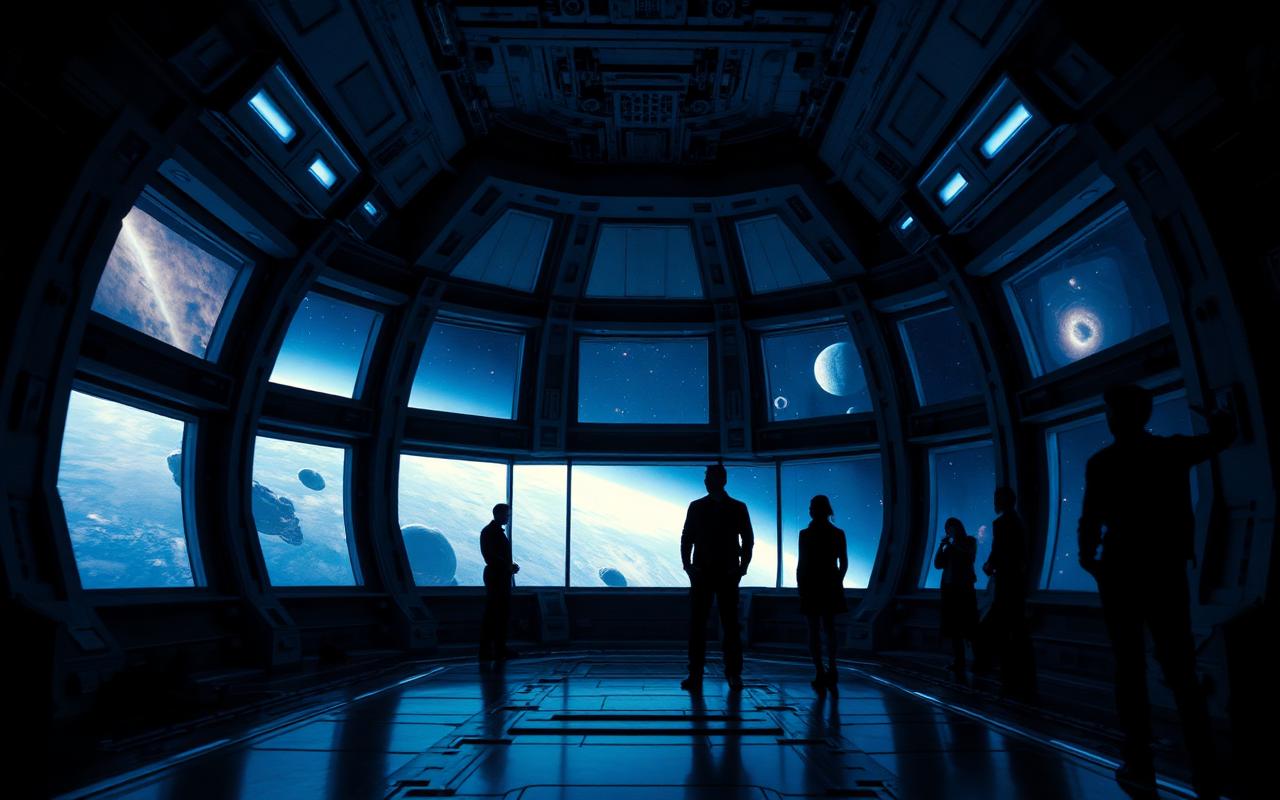
Review: ‘Meridian Station’ Is Ambitious Science Fiction That Mostly Lands
A cerebral, slow-burning science fiction film about isolation, communication, and the limits of language that rewards patience even when it tests it. Rating: 3.5/5.