Review: ‘All the Light Below’ Is Breathtaking, Flawed, and Essential
A three-hour war epic with the audacity to centre not on battles but on what people do to keep living when the battles are over. Demanding, devastating, and extraordinary. Rating: 5/5.
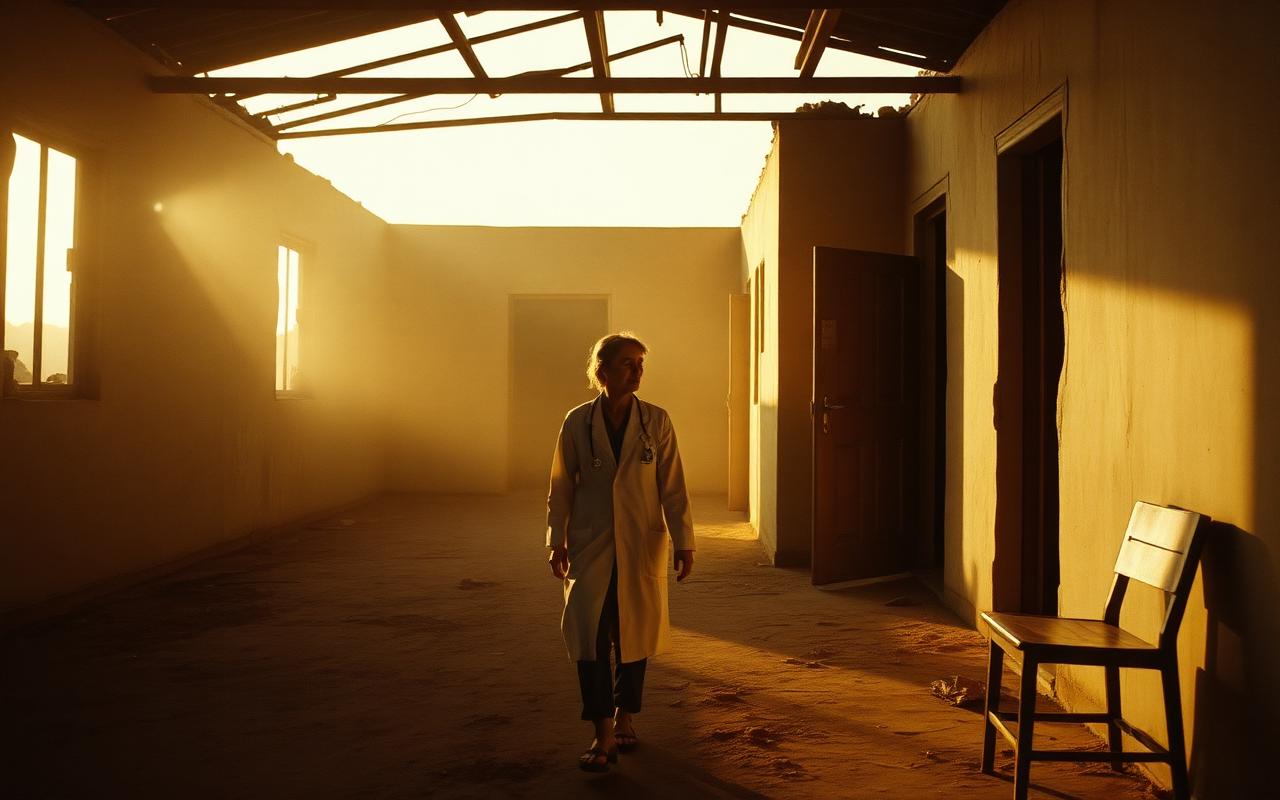
Directed by Amara Diallo. Starring Léa Fontaine, Kwame Asante, Irene Barros, and Emmanuel Obi. 187 minutes. Rated R.
Three hours is a long time to ask of an audience. It is long enough that you become conscious of your body in the seat, long enough that the film has to earn and re-earn your attention rather than simply holding it. Amara Diallo’s All the Light Below earns that attention completely, and then does something more difficult: it makes the length feel essential. When it ends, the three hours feel like they have passed both very slowly and not slowly enough.
The film is set in the aftermath of a fictional civil conflict in an unnamed West African country — the decision to leave both the country and the conflict unnamed is deliberate, and the film earns the universality it is reaching for. It follows three characters across five years of what official language calls “reconstruction”: Amara (Léa Fontaine), a field surgeon trying to rebuild a functioning clinic in a small town without electricity or reliable supply chains; Joseph (Kwame Asante), a former soldier navigating the bureaucratic machinery of a demobilisation programme that barely functions; and Grace (Irene Barros), a teenage girl who was separated from her family during the conflict and who is being absorbed, in ways she cannot fully understand, into a new and not entirely safe situation.
Structure and Form
Diallo does not intercut between these storylines in the conventional manner. Instead, the film proceeds in long, largely self-contained movements — an hour with Amara, an hour with Joseph, an hour with Grace — before a final section that brings them briefly and obliquely into the same orbit. This structural decision is risky. It demands patience during the first movement, when you don’t yet know how the stories will relate, and it sacrifices the momentum that crosscutting would provide.
What it gains is something rarer: the cumulative weight of lives lived in full. Each movement has time to breathe, to include moments that serve no narrative function but enormous human ones — the way Amara’s clinic nurse has a particular method for making tea that soothes every patient who watches it; the hours Joseph spends each evening at a bar not drinking, just sitting, because sitting with people is different from being alone. These details accumulate into something that feels, by the end of the film, like genuine knowledge of three human beings.
The Performances
Léa Fontaine, best known for her work in French-language television, gives what may be the performance of the year. Amara is a character defined by competence — a woman who solves problems methodically, whose emotional register is controlled and professional — and Fontaine navigates the gap between Amara’s functional surface and her interior devastation with extraordinary precision. There are two scenes in the film’s first movement that are likely to be discussed wherever serious cinema is discussed for years.
Kwame Asante has the film’s most conventionally dramatic arc — Joseph’s backstory involves acts of violence that are revealed gradually — and handles it without a single false note. His is the performance most at risk of tipping into the kind of nobility that turns characters into symbols, and Asante consistently, quietly resists that gravity.
Irene Barros is a young actress previously unknown outside of Portuguese theatre, and her performance as Grace is a revelation. She brings a quality of watchfulness to the role that is technically difficult to achieve: Grace is a teenager who has learned that the safest response to most situations is careful observation and strategic compliance, and Barros conveys this without ever making it seem like passivity. You are always aware of how much is happening behind Grace’s composed exterior.
The Film’s Argument
Films about war and its aftermath typically make an argument — usually either about the horror of conflict (stop this from happening) or the heroism of those who fight (these sacrifices were worth it). All the Light Below is interested in something less tidy: the question of what it means to keep going, to rebuild a life and a community, in circumstances that provide very little practical or psychological support for doing so.
The international aid infrastructure that surrounds all three characters is depicted without sentimentality as a system of well-intentioned, frequently counterproductive interventions administered by people who cycle through for six months and then leave. This is not a polemic — the film is too scrupulous for that, and it shows the aid workers as complicated individuals doing their complicated best — but it creates an honest context for understanding why reconstruction is so much harder than the word suggests.
By its end, All the Light Below has not resolved its characters’ situations. It has shown us what they are capable of, what they have lost, and what they are building — imperfectly, stubbornly, in conditions that do not deserve their effort. That is, the film seems to suggest, what living after catastrophe looks like. It is both honest and, in its way, a form of radical hope.
Rating: 5 out of 5 stars

Review: ‘Paper Tigers’ Is the Comedy of the Year
A furiously funny workplace comedy set inside a struggling regional newspaper that somehow manages to be both a sharp satire of the media industry and a genuinely touching portrait of people who care about things that the world keeps telling them don’t matter. Rating: 4/5.

Review: ‘Meridian Station’ Is Ambitious Science Fiction That Mostly Lands
A cerebral, slow-burning science fiction film about isolation, communication, and the limits of language that rewards patience even when it tests it. Rating: 3.5/5.